Cefalor
Cefalor (Cefaclor) by Bosch is a 250mg/5ml strength granule for oral suspension of 60ml (When reconstituted) in strawberry flavour. It is an antibiotic that is used for treating a wide range of bacterial infections.
Package Contains: Each Cefalor package contains a 60ml suspension bottle of 250mg/5ml & a leaflet.
Composition: 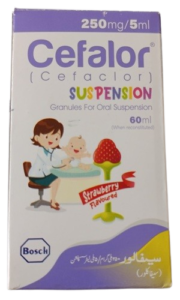
When reconstituted as directed.
Each 5ml contains:
Cefaclor U.S.P. 250 mg as Cefaclor Monohydrate
(Product Specs. U.S.P.)
Dosage: As directed by the physician.
For complete information, please scan the QR code provided on the top flap of carton.
Directions for Reconstitution: Add a small quantity of pre-boiled cool water in the bottle and shake; after this add more water upto the mark given on the bottle and shake vigorously. 60ml reconstituted suspension is available after adding 40ml water, which should be used within 7 days.
Precautions: Once reconstituted the suspension should be stored in a refrigerator (2°C-8°C) for upto 14 days without loss of potency.
- Do not take if seal is broken.
- Keep out of the reach of the children.
- Close the bottle properly after use.
- To be sold on prescription of a registered medical practitioner only.
- Shake well before use.
Uses: Cefalor suspension is indicated for the treatment of the following infections due to susceptible micro-organisms:
- Respiratory tract infections, including pneumonia, bronchitis, exacerbations of chronic bronchitis, pharyngitis and tonsillitis, and as part of the management of sinusitis.
- Otitis media.
- Skin and soft tissue infections.
- Urinary tract infections, including pyelonephritis and cystitis.
- Cefalor has been found to be effective in both acute and chronic urinary tract infections.
- Cefaclor is generally effective in the eradication of streptococci from the nasopharynx.
Dosage & Administration:
Adult and Elderly: The usual adult dosage is 250mg every eight hours. For more severe infections or those caused by less susceptible organisms, doses may be doubled. Doses of 4g per day have been administered safely to normal subjects for 28 days, but the total daily dosage should not exceed this amount.
Pharyngitis, tonsillitis, skin and skin structure infections: 375mg twice daily.
Lower urinary tract infections: 375mg twice daily or 500mg once daily.
Bronchitis: 375mg or 500mg twice daily
Pneumonia: 750mg twice daily.
Paediatrics: The usual recommended daily dosage for children is 20mg/kg/day in divided doses every eight hours, as indicated. For bronchitis and pneumonia, the dosage is 20mg/kg/day in divided doses administered 3 times daily. For otitis media and pharyngitis, the total daily dosage may be divided and administered every 12 hours. Safety and efficacy have not been established for use in infants aged less than one month.
| Suspension 125mg/5ml | Suspension 250mg/5ml | |
| <1 year (9kg) | 2.5ml t.i.d. | |
| 1-5 years (9kg-18kg) | 5.0ml t.i.d. | |
| Over 5 years | 5.0ml t.i.d. |
In more serious infections, otitis media, sinusitis and infections caused by less susceptible organisms, 40mg/kg/day in divided doses is recommended, up to a daily maximum of 1g. In the treatment of beta-haemolytic streptococcal infections, therapy should be continued for at least 10 days.
Side Effects: Gastrointestinal: The most frequent side-effect has been diarrhea. It is rarely severe enough to warrant cessation of therapy. Colitis, including rare instances of pseudomembranous colitis, has been reported. Nausea and vomiting have also occurred.
Hypersensitivity: Allergic reactions such as morbilliform eruptions, pruritus, and urticaria have been observed. These reactions usually subside upon discontinuation of therapy. Serum sickness-like reactions (erythema multiforme minor, rashes or other skin manifestations accompanied by arthritis/arthralgia, with or without fever) have been reported. Lymphadenopathy and proteinuria are infrequent; there are no circulating immune complexes and no evidence of sequelae.
Occasionally, solitary symptoms may occur, but do not represent a serum sickness-like reaction. Serum sickness-like reactions are apparently due to hypersensitivity and have usually occurred during or following a second (or subsequent) course of therapy with cefaclor. Such reactions have been reported more frequently in children than in adults. Signs and symptoms usually occur a few days after initiation of therapy and usually subside within a few days of cessation of therapy. Antihistamines and corticosteroids appear to enhance resolution of the syndrome.
No serious sequelae have been reported. There are rare reports of erythema multiforme major (Stevens-Johnson syndrome), toxic epidermal necrolysis, and anaphylaxis. Anaphylaxis may be more common in patients with a history of penicillin allergy. Anaphylactoid events may present as solitary symptoms, including angioedema, asthenia, oedema (including face and limbs), dyspnoea, paresthesia, syncope, or vasodilation. Rarely, hypersensitivity symptoms may persist for several months.
Instruction: Before reconstitution, protect from heat, sunlight & moisture; store at room temperature (15°C-30°C).
The expiration date refers to the product correctly stored at the required conditions. 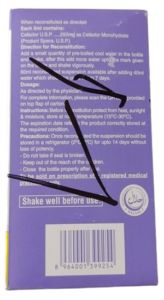
Manufacturer & Buy Online:
Cefalor suspension is manufactured by: Bosch Pharmaceuticals (Pvt) Ltd.
This is the link to the manufacturer: https://bosch-pharma
You can buy it online at: https://dawaai.pk
Or you can purchase it from any nearby pharmacy. It is currently (2026) available at the retail price of around 454 rupees.
By: Gul.