
K-LOT
K-LOT (Phytomenadione) by GT is a paediatric Vitamin K1 injection containing 2 mg/mL. It is available in a 1 mL ampoule for IM, IV, and oral use.
Package Contains: Each K-LOT package contains 1ml ampoule & a leaflet.
Composition: 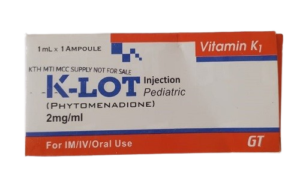
Each ml contains:
Phytomenadione (vitamin K₁) 2mg Product complies with B.P. specs.
Dosage: As directed by the physician.
Usage: Break the ampoule by applying slight pressure with your thumb against the white spot on the ampoule. The ampoule will break safely and easily.
Indications: K-LOT (Vitamin K₁ Injection) is indicated in the following coagulation disorders which are due to faulty formation of factors II, VII, IX and X when caused by vitamin K deficiency or interference with vitamin K activity. Vitamin K₁ Injection is indicated in:
- Anticoagulant-induced prothrombin deficiency caused by coumarin or indandione derivatives.
- Prophylaxis and therapy of hemorrhagic disease of the newborn.
- Hypoprothrombinemia due to antibacterial therapy.
- Hypoprothrombinemia secondary to factors limiting absorption or synthesis of vitamin K, e.g., obstructive jaundice, biliary fistula, sprue, ulcerative colitis, celiac disease, intestinal resection, cystic fibrosis of the pancreas, and regional enteritis.
- Other drug-induced hypoprothrombinemia where it is definitely shown that the result is due to interference with vitamin K metabolism, e.g., salicylates.
Dosage and Administration: For Pediatric K-LOT Injection (Phytomenadione) is administered by IM/IV and Oral route as follows
- K-LOT Injection: oral administration of a single dose of vitamin K protects against classical and early VKDB. For formula-fed neonates without risk of haemorrhage, a 2 mg oral dose of vitamin K at birth, followed by a second 2 mg oral dose between day 2 and 7, is probably sufficient to prevent VKDB. For infants who are exclusively or nearly exclusively breast-fed, weekly oral administration of 2mg (or 25 micro g/day) vitamin K after the initial 2 oral doses is justified at completion of breast-feeding. For neonates at high risk of haemorrhage (premature, neonatal disease, birth asphyxia, difficult delivery, any illness which will delay feeding, known hepatic disease, maternal drugs inhibiting vitamin K activity).
- Doses should be repeated, particularly in premature infants, by a route of administration decided for each dose according to the clinical state of the infant. For infants of mothers treated with drugs inhibiting vitamin K activity, antenatal maternal prophylaxis (10 to 20 mg/day orally for 15 to 30 days before delivery) prevents early VKDB. After neonatal prophylaxis, as for infants at high risk of haemorrhage, doses need to be repeated at a rate and route of administration decided for each dose, according to the clotting factor profile specific for each infant.
- When IM/IV administration K-LOT Injection is considered unavoidable, the drug should be injected very slowly, not exceeding 1 mg per minute. Protect from light at all times. Parenteral drug products should be inspected visually for particulate matter prior to administration, whenever solution and container permit.
- Prophylaxis of Hemorrhagic Disease of the Newborn: The American Academy of Pediatrics recommends that vitamin K₁ be given to the newborn. A single intramuscular dose of Vitamin K₁ Injection 0.5 to 1 mg within one hour of birth is recommended.
- Treatment of Hemorrhagic Disease of the Newborn: Empiric administration of vitamin K₁ should not replace proper laboratory evaluation of the coagulation mechanism. A prompt response (shortening of the prothrombin time in 2 to 4 hours) following administration of vitamin K₁ is usually diagnostic of hemorrhagic disease of the newborn, and failure to respond indicates another diagnosis or coagulation disorder. Vitamin K₁ Injection 1mg should be given intramuscularly. Higher doses may be necessary if the mother has been receiving oral anticoagulants. Whole blood or component therapy may be indicated if bleeding is excessive. This therapy, however, does not correct the underlying disorder and Vitamin K₁ Injection should be given concurrently.
- Anticoagulant-Induced Prothrombin Deficiency in Adults: To correct excessively prolonged prothrombin time caused by oral anticoagulant therapy—2.5 to 10 mg or up to 25 mg initially is recommended. In rare instances 50 mg may be required. Frequency and amount of subsequent doses should be determined by prothrombin time response or clinical condition. If in 6 to 8 hours after parenteral administration the prothrombin time has not been shortened satisfactorily, the dose should be repeated.
Contraindications: Hypersensitivity to any component of this medication.
Pediatric Use: Hemolysis, jaundice, and hyperbilirubinemia in neonates, particularly those that are premature, may be related to the dose of Vitamin K₁ Injection. Therefore, the recommended dose should not be exceeded.
Caution: To be sold and used on the prescription of a registered medical practitioner only. The injection should not be used if separațion has occurred or if oil droplets have appeared.
Instructions: 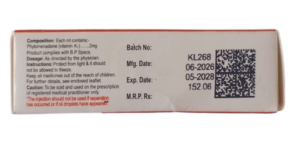
Protect from light & it should not be allowed to freeze.
Keep all medicines out of the reach of children.
For further details, see enclosed leaflet.
Manufacturer & Buy Online:
K-LOT injection is manufactured by: GT Pharma (Pvt.) Ltd.
This is the link to the manufacturer: https://gtpharma
You can buy it online at: https://www.dvago
You can buy it from any nearby pharmacy. As of 2026, it is available at a retail price of around 152 rupees.
By: Urooj