
Flagyl Suspension
Flagyl (Benzoyl Metronidazole) by Hoechst Pakistan is a 120 mL suspension, which is an antibiotic and anti-infective. It is used to treat infections caused by anaerobic bacteria and parasites.
Package Contains: Each Flagyl package contains a suspension (syrup) bottle of 120ml & a leaflet.
Composition: 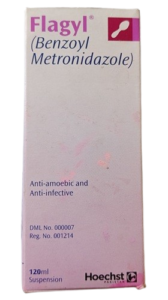
Each 5ml contains: Benzoyl Metronidazole 320mg,
equivalent to Metronidazole BP 200mg.
Dosage: As directed by physician.
Indications / Uses: Flagyl suspension is administered orally. It is recommended that the dose be taken at least one hour before a meal.
- Anaerobic infections: The duration of a course of Flagyl treatment is about 7 days but will depend upon the seriousness of the patient’s condition, assessed clinically and bacteriologically.
- Prophylaxis against anaerobic infection and Treatment of established anaerobic infection: Children: 7.5 mg/kg – every 8 hours.
- Protozoal and other infections.
Contraindications: Hypersensitivity to imidazoles.
Interactions: Disulfiram, Alcohol, Oral anticoagulant therapy(warfarin type), Lithium, Cyclosporin, Phenytoin or phenobarbital, 5-fluorouracil, Busulfan. Drugs that prolong QT interval: QT prolongation has been reported, particularly when metronidazole was administered with drugs with the potential for prolonging the QT interval.
Adverse Reactions: agranulocytosis, neutropenia, thrombocytopenia; angioedema, anaphylactic shock; psychotic disorders including confusion, hallucinations; depressed mood; peripheral sensory neuropathy; headache, convulsions, dizziness; encephalopathy and subacute cerebellar syndrome, which may resolve with discontinuation of the drug; aseptic meningitis; meningitis; vertigo; transient vision disorders; optic neuropathy/neuritis; hearing impaired/hearing loss (including sensorineural); tinnitus.
Frequency not known: QT prolongation has been reported, particularly when metronidazole was administered with drugs with the potential for prolonging the QT interval; epigastric pain, nausea, vomiting, diarrhea; oral mucositis, taste disorders, anorexia; reversible cases of pancreatitis; tongue discoloration/furry tongue; increase in liver enzymes, cholestatic or mixed hepatitis and hepatocellular liver injury, sometimes with jaundice, liver failure in patients treated with metronidazole in combination with other antibiotic drugs; rash, pruritus, flushing, urticaria; pustular eruptions, fixed drug eruption; acute generalized exanthematous pustulosis; Stevens-Johnson syndrome, toxic epidermal necrolysis; fever.
Overdose: Single oral doses of metronidazole, up to 12 g, have been reported in suicide attempts and accidental overdoses.
Signs and Symptoms: Symptoms were limited to vomiting, ataxia, and slight disorientation.
Management: There is no specific antidote for metronidazole overdoses. In case of suspected massive overdoses, symptomatic and supportive treatment should be instituted.
Storage: Store below 25°C. Protect from light. Shake well before use. Keep medicines out of the reach of children. To be sold on the prescription of a registered medical practitioner only.
Expiry date: Do not use later than the date of expiry. Full prescribing information is available on request at the address mentioned below.
Warnings / Precautions: Cases of severe hepatotoxicity/acute hepatic failure, including cases with fatal outcome or very rapid onset after treatment initiation in patients with Cockayne syndrome have been reported with products containing metronidazole for systemic use. In this population, metronidazole should therefore be used after careful benefit-risk assessment and only if no alternative treatment is available.
Liver function tests must be performed just prior to the start of therapy, throughout and after the end of treatment until liver function is within normal ranges, or until the baseline values are reached. If the liver function tests become markedly elevated during treatment, the drug should be discontinued.
Patients with Cockayne syndrome should be advised to immediately report any symptoms of potential liver injury to their physician and stop taking metronidazole.
Cases of severe bullous skin reactions such as Stevens-Johnson syndrome (SJS), toxic epidermal necrolysis (TEN) or acute generalized exanthematous pustulosis (AGEP) have been reported with metronidazole. If symptoms or signs of SJS, TEN, or AGEP are present, Flagyl treatment must be immediately discontinued.
Manufacturer & Buy Online: 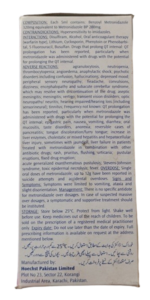
Flagyl suspension is manufactured by: Hoechst Pakistan Limited.
This is the link to the manufacturer: https://hoechst
You can buy it online at: https://www.dvago.pk
Or you can purchase it from any nearby pharmacy. It is currently (2026) available at the retail price of around 155 rupees.
By: Gul.