Cyrocin Suspension
Cyrocin suspension (Ciprofloxacin) by Highnoon is a 125 mg/5 mL dry powder for suspension in a 60 mL bottle after reconstitution. It is a fluorinated 4–quinolone or fluoroquinolone antibacterial with a wider spectrum of activity than nalidixic acid and more favourable pharmacokinetics, allowing its use in systemic infections.
Package Contains: Each Cyrocin package contains a suspension of 125mg/5ml in a bottle of 60ml & a leaflet.
Composition: 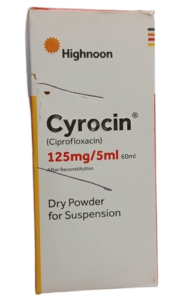
Each 5ml contains:
Ciprofloxacin (as Hydrochloride) 125mg
Product Specifications: USP specs.
Directions for Preparing Suspension: Tap the bottle to loosen the powder, open the cap of the bottle and add 5 spoons (25ml) of boiled, cooled water, replace the cap and shake well. Further add water up to the mark on the label and shake vigorously until a uniform suspension is prepared.
Reconstituted suspension should be used within 7 days if stored at room temperature or within 14 days if refrigerated. After reconstitution, keep tightly closed. Avoid freezing. Shake well before taking each dose.
Indications / Uses: Cyrocin Suspension is indicated for treatment of infections caused by susceptible isolates of the designated microorganisms in the conditions and patient populations listed below.
Urinary Tract Infections: It is indicated in adult patients for treatment of urinary tract infections caused by Escherichia coli, Klebsiella pneumoniae, Enterobacter cloacae, Serratia marcescens, Proteus mirabilis, Providencia rettgeri, Morganella morganii, Citrobacter koseri, Citrobacter freundii, Pseudomonas aeruginosa, methicillin-susceptible Staphylococcus epidermidis, Staphylococcus saprophyticus, or Enterococcus faecalis.
Acute Uncomplicated Cystitis: It is indicated in adult female patients for treatment of acute uncomplicated cystitis caused by Escherichia coli or Staphylococcus saprophyticus.
Chronic Bacterial Prostatitis: It is indicated in adult patients for treatment of chronic bacterial prostatitis caused by Escherichia coli or Proteus mirabilis.
Lower Respiratory Tract Infections: It is indicated in adult patients for treatment of lower respiratory tract infections caused by Escherichia coli, Klebsiella pneumoniae, Enterobacter cloacae, Proteus mirabilis, Pseudomonas aeruginosa, Haemophilus influenzae, Haemophilus parainfluenzae, or Streptococcus pneumoniae. It is also indicated for the treatment of acute exacerbations of chronic bronchitis caused by Moraxella catarhalis.
Acute Sinusitis: It is indicated in adult patients for treatment of acute sinusitis caused by Haemophilus influenzae, Streptococcus pneumoniae, or Moraxella catarhalis.
Skin and Skin Structure Infections: It is indicated in adult patients for treatment of skin and skin structure infections caused by Escherichia coli, Klebsiella pneumoniae, Enterobacter cloacae, Proteus mirabilis, Proteus vulgaris, Providencia stuartii, Morganella morganii, Citrobacter freundii, Pseudomonas aeruginosa, methicillin-susceptible Staphylococcus aureus, methicillin-susceptible Staphylococcus epidermidis, or Streptococcus pyogenes.
Bone and Joint Infections: It is indicated in adult patients for treatment of bone and joint infections caused by Enterobacter cloacae, Serratia marcescens, or Pseudomonas aeruginosa.
Complicated Intra-Abdominal Infections: It is indicated in adult patients for treatment of complicated intra-abdominal infections (used in combination with metronidazole) caused by Escherichia coli, Pseudomonas aeruginosa, Proteus mirabilis, Klebsiella pneumoniae, or Bacteroides fragilis.
Infectious Diarrhoea: It is indicated in adult patients for treatment of infectious diarrhoea caused by Escherichia coli (enterotoxigenic isolates), Campylobacter jejuni, Shigella boydii, Shigella dysenteriae, Shigella flexneri or Shigella sonnei when antibacterial therapy is indicated.
Typhoid Fever (Enteric Fever): It is indicated in adult patients for treatment of typhoid fever (enteric fever) caused by Salmonella typhi. The efficacy of ciprofloxacin in the eradication of the chronic typhoid carrier state has not been demonstrated.
Uncomplicated Cervical and Urethral Gonorrhoea: It is indicated in adult patients for treatment of uncomplicated cervical and urethral gonorrhoea due to Neisseria gonorrhoeae.
Complicated Urinary Tract Infections and Pyelonephritis: It is indicated in paediatric patients 1 year to 17 years of age for treatment of complicated urinary tract infections (cUTI) and pyelonephritis due to Escherichia coli.
Inhalational Anthrax (Post-exposure): It is indicated in adults and paediatric patients from birth to 17 years of age for inhalational anthrax (post-exposure) to reduce the incidence or progression of disease following exposure to aerosolized Bacillus anthracis.
Plague: It is indicated for treatment of plague, including pneumonic and septicaemic plague, due to Yersinia pestis (Y. pestis) and prophylaxis for plague in adults and paediatric patients from birth to 17 years of age. Ciprofloxacin should be used only to treat or prevent infections that are proven or strongly suspected to be caused by susceptible bacteria. If anaerobic organisms are suspected of contributing to the infection, appropriate therapy should be administered. Appropriate culture and susceptibility tests should be performed before treatment in order to isolate and identify organisms causing infection and to determine their susceptibility to ciprofloxacin. Therapy with ciprofloxacin may be initiated before results of these tests are known; once results become available appropriate therapy should be continued. As with other drugs, some isolates of Pseudomonas aeruginosa may develop resistance fairly rapidly during treatment with ciprofloxacin. Culture and susceptibility testing performed periodically during therapy will provide information not only on the therapeutic effect of the antimicrobial agent but also on the possible emergence of bacterial resistance.
Ciprofloxacin is not a drug of first choice in the treatment of presumed or confirmed pneumonia secondary to Streptococcus pneumoniae.
Side Effects: The reported adverse events of ciprofloxacin are tendinopathy and tendon rupture, exacerbation of Myasthenia Gravis, hepatotoxicity, QT prolongation, hypersensitivity reactions including serious and fatal reactions, serious adverse reactions with concomitant theophylline, clostridium difficile-associated diarrhoea, peripheral neuropathy, musculoskeletal disorders in paediatric patients, photosensitivity/phototoxicity, development of drug resistant bacteria, gastrointestinal disturbances include nausea, diarrhoea, vomiting, constipation, abdominal pain, dyspepsia, pseudomembranous colitis, pancreatitis, abdominal distension, gastrointestinal bleeding, intestinal perforation, dysphagia, headache, dizziness, confusion, insomnia, tremors, drowsiness, restlessness, nightmares, lethargy, abnormal gait, agitation, anxiety, hallucination, psychotic reactions, depression, convulsions, intracranial hypertension, paraesthesia, paranoia, irritability, ataxia, amnesia, proctitis, migraine, hypertonia, twitching, polyneuropathy.
Rash, pruritus, skin reactions includes vasculitis, erythema multiforme, Stevens-Johnson syndrome, urticaria, fever, exfoliative dermatitis, flushing, angioedema, erythema nodosum, exfoliative dermatitis, fixed eruption, serum sickness like reactions, acute generalized exanthematous pustulosis, petechia, toxic epidermal necrolysis, reversible arthralgia, joint stiffness, myoclonus, myalgia, muscle weakness in patient with myasthenia gravis, severe exacerbation leading to respiratory failure or death; elevated liver enzyme values jaundice, hepatitis, tachycardia, hypotension, oedema; syncope, hot flushes, sweating, angina pectoris, myocardial infarction, cardiopulmonary arrest, Torsade de Points and ventricular arrhythmia. Special senses adverse effects details blurred vision, disturbed vision, decreased visual acuity, diplopia, tinnitus, hearing loss, bad taste, anosmia, hyperesthesia and taste loss.
Renal effects include acute renal failure, dysuria, interstitial nephritis, acute tubular necrosis, transient increase in serum creatinine, or blood urea nitrogen, crystalluria, dyspnoea, laryngeal oedema, haemoptysis, bronchospasm, hypoglycaemia, hyperglycaemia, haematological disturbances, including eosinophilia, thrombocytopenia, leukopenia and very rarely pancytopenia, haemolytic anaemia, agranulocytosis, neutropenia, prothrombin time prolongation or decrease, cholesterol elevation and potassium elevation. 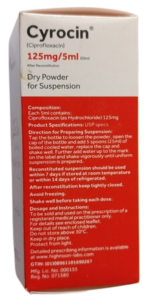
Dosage and Instructions:
To be sold and used on the prescription of a registered medical practitioner only.
For details, see enclosed leaflet.
Keep out of reach of children.
Do not store above 30°C.
Keep in dry place.
Protect from light.
Manufacturer & Buy Online:
Cyrocin Suspension is manufactured by: Highnoon Laboratories Ltd.
This is the link to the manufacturer: www.highnoon
You can buy it online at: https://healthwire.pk
Or you can purchase it from any nearby pharmacy. It is currently (2026) available at the retail price of around 211 rupees.
By: Gul.